Thursday, January 10, 2019

More Books: Galápagos, Love, Enzo, Joy

1. Galapagos (Kurt Vonnegut)

A Vonnegut-meander through one way humans might evolve via natural selection.

2. A General Theory of Love (Michael Lewis, PhD)

A general theory of how we form attachments to people from childhood through adulthood. How our emotional architecture built via neural connections and limbic resonance influences our identity and the identities of those around us.
From birth to death, love is not just the focus of human experience but also the life force of the mind, determining our moods, stabilizing our bodily rhythms, and changing the structure of our brains. The body's physiology ensures that relationships determine and fix our identities. Love makes us who we are, and who we can become. In these pages, we explain how and why this is so. 
During the long centuries when science slumbered, humanity relied on the arts to chronicle the heart's mysterious ways. That accumulated wisdom is not to be disdained. This book, while traveling deep into the realm of science, keeps close at hand the humanism that renders such a journey meaningful. The thoughts of researchers and empiricists join those of poets, philosophers, and kings. Their respective starting points may be disparate in space, time, and temperament, but the voices in this volume rise and converge toward a common goal.

3. [Re-Read] The Art of Racing in the Rain (Garth Stein)

As expected, I cried. And sobbed. This time around, I noticed a lot more about cars than I had before.

4. [Currently Reading] The Life-Changing Magic of Tidying up (Marie Kondo)

Start by tidying by category. Just doing clothes and bike stuff has already made a huge difference in my life! Kondo purports three main types of people: "can't put it back", "can't throw it away", and the combination of "can't put it back"+"can't throw it away." Start with clothes. I donated a bag of clothes that didn't bring me joy (even after I thought I had minimized five months ago!). And now I find myself enjoying putting clothes away now!

[Want to Read] Borne (Jeff Vandimere)

[Want to Read] The City & The City (China Mieville)

[unifinished, save for later] Timequake (Kurt Vonnegut)

Constipation

blabbering:

mindfulness has become a very hailed topic in this transforming society - where consumerism and information overload is rampant. several years ago, i read "mindfulness in plain english" and it was very eye opening but i don't think i ever put it into practice. though i was mindful that i needed to be mindful. and i knew how to take an emotion, chew on it, then let it go. over the years, however, i've been learning that this process can and should be applied to other aspects of life (other than dealing with emotions which used to have such a strong control and influence over me).

one such area is in my struggle for productivity.

let's take "writer's block," for example. what is it?

it's when ideas can't find a way out. or ideas can't find a way in. or something in the neural pipeworks is broken and all that comes out is jumbled mess of god knows what. you end up paralyzed and frustrated and fixated on things that don't help you get "out" of the writer's block. something is stopping you from being creative or writing down something or being productive, in the way that you want to be. you either have to let new ideas in, fix the pipeworks (e.g. refine your writing skills), or open the clogged faucet somehow.

it's sad to think that despite all of the information we are consuming in this day and age - current events, ideas floating around, television, and so much media - there is such a lack of outflow from those consuming. i find this true of myself. i have yet to ask if others experience this as well.

in short, i could say that one of the main reasons i often find myself paralyzed in life is that i'm mentally constipated, not paralyzed... in my little fairytale land of analogies, this makes so much sense. there's so much to take in, so much to let go of, and so so much to digest and spit out.

sometimes i want to collect and absorb, and that's great. but other times i have to let things out.

but hopefully it's not explosive diarrhea....

Monday, December 17, 2018

Childhood's End: The Human Spectacle

Another scifi classic first published in 1953, Childhood's End, traverses concepts like alien invasion, destiny, the supernatural, humanity's purpose, and free will. Clarke's premise begins with the invasion of the Overlords, who are technologically advanced, benevolent and seek to supervise the world in the name of bringing peace and prosperity. They are successful and bring about the golden age for man but their true purpose and appearance remains shrouded in mystery for a handful of generations. Childhood's End examines the result of their invasion and the eventual culmination of their arrival.


I found myself compelled by many of the twists and turns of the plot and the philosophical ruminations on the peaks of technological and social progress. What is religion, what is science, what is art, what is the purpose of struggle and strife? What if we removed war and tribulation and fulfill the base needs of all humanity (by and large eliminating crime, poverty, and hunger)? Then we see humans flourish on earth. With a premise like this, Clarke inevitably probes into humanity's ultimate purpose....
“No utopia can ever give satisfaction to everyone, all the time. As their material conditions improve, men raise their sights and become discontented with power and possessions that once would have seemed beyond their wildest dreams. And even when the external world has granted all it can, there still remain the searchings of the mind and the longings of the heart.” 
On my read-through, the book feels disjointed and not as fleshed out as I would have liked it. However,  Childhood's End successfully stretched the dimensions of my mind, even just a little. The final pages of the book, in particular, leave me with an internal struggle (possible spoilers ahead?):

What is humanity and are we irrelevant in the vast expanse of the universe? Sometimes I read books like these and it's hard, as an individual soul (or am I?), to get on-board with the idea presented here --- that we are meant to merge with a higher power. Yes, something innate within us longs to be part of a collective, a community, and that somehow provides meaning and purpose. At the same time, we are individual and existential... and that somehow allows self-determination and free will. That's a simplistic summary of what I view to be the human paradox, to be sure. Grandiose religion, science, and art all seem to dance around this. As I am, I am stuck in an in-between.

Thought-provoking, imaginative, full of high-concepts, and plot-driven, reading Childhood's End is an embrace of science fiction's roots. Clarke is one of the "big three" of classic science fiction (among Asimov and Heinlein) so it stands to reason that it is a "must read." It is definitely still relevant more than half a century later.

P.S. I should really start my own Goodreads.... but I don't feel very confident in my book reviews because I normally don't put a lot of time or thought into it. Though I will admit I've gotten somewhat better over time, I mostly just spew out a bunch of random thoughts (and spoilers) and leave it as is.

Currently Listening: Kina Grannis - For Now
Currently Reading: Circe (Madeline Miller), The Social Animal: The Hidden Sources of Character, Love, and Achievement (David Brooks)


Sunday, December 16, 2018

sunset peak

under the lens i lend to you,
 i invite you to the landscape of my mind.

but how vexing this feeling is --
  feeling seen and examined --
though i long for it.
want to be seen.
want to be understood.
 (it's not an uncommon feeling, is it?)

after years of loaning --
 i am used to returns.
maybe my stories never mattered,
 but i'll tell them anyway,
 if you'll listen.
 we can trade.

but then you asked for the prequels --
 watched the trailers reel --
longed for something too.
could i even dare,
with your stories,
 to co-imagine the sequels?

someone asked for more.
 how unfamiliar.
long ago, a naive self felt this before,
 blinded by my own hopefulness,
 and now: caution.
 skepticism.

too many times i've fallen off the deep end,
 wanting so badly to feel something real.

so let me sit here for a moment..
 and maybe i'll yield
 maybe i'll
 drift.

Saturday, November 10, 2018

mokelumne wilderness

when we were together,

you were the salience of a stable calm
in the chaotic winds of change -
moments that made me better.
moments that made you love -
i was the essence of warm sunlight
scattered in an achromatic meadow.

we climbed mountains,
i pushed you further,
you drew me inward.
home was always within.
and we saw that through the leaves
from the forest floor.

we laughed, hugged, joked, loved..
i learned and you learned and we learned.

but it didn't last like we said it would.
we theorized - said forever in passing.
but did we truly believe it?

when i find an old memory, i might feel homesick
and i'm fraught with questions:

could i have tried harder?
could i have yielded more?
could i have loved better?
could i have been more patient?

pointless recursions -
the answer is always the same
(maybe / not enough / we grew apart)
the night changes
and we're only human - only human.
i let the rain fall
and then i look inward
and i touch the newness of a clear sky
from the mountain of my own soul.

we were only almost forever
but we loved, and that was certain.
there was so much good -
so much to remember -
but most of all,
you changed me for good.

because of that
i can look back and say
"that was wonderful.
thank you, old soul,
old friend."

i know that will last.

Friday, October 26, 2018

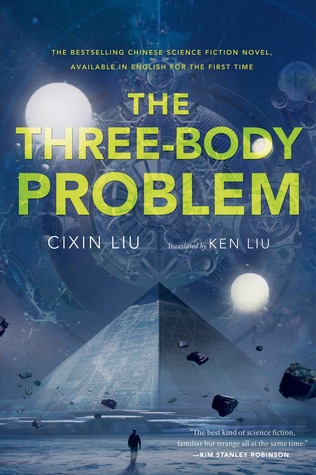
The Three-Body Problem: tyranny, physics, and humanity's place in the universe

As a Star Trek enthusiast (fledgling though I may be), I like space. Naturally, this erupts from a love of science fiction, particularly how our imaginations can be evoked through the fantastic possibilities
of science. After all, "there is no science without fancy and no art without fact" (Vladimir Nabokov).

I've finally finished the 2015 Hugo Award winning novel "The Three-Body Problem" by Liu Cixin (translated by Ken Liu), and it was totally worth the read! I have so much to say... but I'm not the best at book reviews without being spoilery... so as is my usual M.O., I'll just throw out some spaghetti:

Flat Characters but Science- and Plot-Focused 

I will say that character development was not a particular strength of this book. Told in third person, the characters are mainly used as a medium for the alternate realities imagined in this book. However, now that I think about it, this commonly happens in many science-fiction novels. I find a lot of thrill in complex character development but when it comes to sci-fi, if I'm too engaged in the imaginative science, I think that's a win. But it's certainly not for everyone. The Three-Body Problem definitely captured me in many ways: (a) it appealed to my budding interest in history, (b) its science fiction had a strong basis in physics, and in particularly astronomy, and (c) it was a deep dive into what "first contact" with extraterrestrial life would really mean for the fate of humanity.

Historical Setting

The backdrop of the 3BP story begins during the Cultural Revolution in China. I learned quite a lot about the Cultural Revolution in China; it had quite a rounded collection of perspectives, ranging from reactionaries, the Red Guard, and the political elite. A great portion of the book is spent setting up the world and exploring the condition of humanity during this time. After a slow start to reading through the set-up, things (finally) started to get weird: the "fiction" part is an imaginative (and yet tenable) spin on China's race for the search of extraterrestrial intelligence (SETI) at Red Coast Base. Here, the main character, discovers a method of amplifying outgoing and inbound signals and secretly sends the first successful "first contact" message out into the universe.

Human history is indeed filled with horrors and wars and atrocities, and the characters of the book are products of those. Their actions are motivated by formative experiences. The characters are subjected to the tyranny of humanity and it feels outside of their control. It's hard to agree that this is a world where positive experiences greatly outweigh negative ones in the human psyche. In the current political sphere and historically, humans have paid forward fear (the basis of hate and anger and self-preservation) in seemingly limitless amounts. Despite the ideals and smaller experiences of kindnesses experienced by the characters, often the educated elite, they hang on to a cold and cynical ideal. Maybe we don't pay forward kindness or love enough. Maybe ideals are simply not enough (if it were true, communism would actually work.) Just something to think about...

Physics

Having not taken a physics class for several years, I found the physics topics largely educational. Besides the obvious staging of SETI technology, The Three-Body Problem explores in-depth the classical three body problem in physics, with which there currently is no known computational solution. This problem is crucial to world-building for the alien civilization (my favorite visualization is on page 238 of the Tor translated publication) of the closest triple star system to our solar system (Alpha Centauri AB and Proxima Centauri). Imagine a civilization's (the Trisolarans) planet whose orbit was affected by THREE suns -- now that's a thought exercise! -- and Liu Cixin brazenly dives deep into what that might look like.

Other scientific concepts touched on in this book:
  • astronomy (obviously)
  • special vs general relativity
  • artificial intelligence
  • computing technology
  • dimensional folding

The Fermi Paradox

Ah, a basic tenant of SETI -- the Fermi paradox. The Fermi paradox has four main premises:

  • there are billions of stars in the galaxy and many are billions of years older than our solar system
  • it is highly probably that some of these stars have Earth-like planets that support intelligent life
  • some of these civilizations have developed interstellar travel
  • even at the slow pace of currently envisioned interstellar travel, the Milky Way could easily be traversed in a few million years
... so why have we not heard from anyone yet?

Many theories try to answer this question. But the upstanding theory that 3BP alludes to is the dark forest theory. In this theory, we know so little of the civilizations out there and the potential technologies they may possess that it is dangerous to communicate with them. Any contact would risk revealing our location in the galaxy and thus leave us vulnerable to destruction.

3BP also explores, with Asimov-like echoes, the general progression of science and technology towards interstellar exploration. And do we really want that? What does society look like once we've established mastery over subatomic particles or antimatter? We might just blow each other up and there might be nothing left. Indeed, an overwhelming motif of 3BP is that the human civilization is self-destructive and "undeserving" of continuation. Judgment day is coming for Earth - in what form? Alien invasion or our own demise? 3BP asks the question: what do we really mean in the grand scheme of the universe? Can we, as a whole civilization, really be redeemed? Do our actions really matter? Who - are - we?


Conclusions

Ultimately, since the book is the first of a trilogy, it is largely world development. We don't meet the Trisolarans in person but we have communicated with them. 3BP asks us to look up at the sky and imagine the possibility of extraterrestrial life and how it would ultimately change the face of the Earth and how we understand the universe should we make contact with them. It asks us to think about our political climate and how poorly we treat one another, both individually, as larger organizations or countries, and even within the groups we identify with. What ideals are you driven by, if any?

My next question is... should I read the next two books of the trilogy?

I think I've racked my brain enough in this space (hah!)... I've still got a long queue of other books to get through but I'm putting The Dark Forest somewhere on there. :)

Other Interesting Reads:
What Happens if China Makes First Contact?

Next Reads: On Tyranny: Twenty Lessons from the Twentieth Century (Timothy Snyder), A General Theory of Love (Thomas Lewis, M.D. Fair Amini, M.D., Richard Lannon, M.D.)

Wednesday, September 12, 2018

Bad Blood, a story of the tell-tale start-up

Back in 2014 while studying for my master's degree, I remember touring Silicon Valley for the first time. It was a brand new world to me and I was, for lack of a better term, starry-eyed. Everything about the Bay Area told us to look for new ways to innovate and to make money out of technology or some big idea. It's what got me out of the idea that I wanted to do anything drug-related or something where the impact timeline would be 10+ years down the line.

Four years later, a Wall Street Journal investigative journalist publishes a book titled "Bad Blood: Secrets and Lies in a Silicon Valley Startup." All there is to be said about the book has already been said. In my opinion, it's worth the read if you're in biotech, basic sciences, or even just interested in a startup in the healthcare landscape.

There are so many facets to the story of Theranos. First, it's valuable to understand that the vision of Theranos was one of wanting to change the world and revolutionizing the healthcare industry. The mission was noble. The difference it could make to healthcare and medicine was profound (along the lines of preventative healthcare, drug reaction monitoring, etc.). There was a lot of money to be made. If the technology challenges had actually been overcome in the time that Ms. Holmes led Theranos (it called for advances and innovations in chemistry, microfluidics, scale-up, etc.), it would have truly been the next step to the tricorders of Star Trek. Combine this with the Silicon Valley hype train that the starry-eyed VCs rode in the 2000s and early 2010s. Combine that with Ms. Holmes' captivation with Steve Jobs and the idea of changing the world from a young age.

It's a very cautionary tale. Many profess that Ms. Holmes' was genuine in her desire to make a great technology that would help the world, but that she surrounded herself with the wrong people who encouraged her to cross too many lines, tell too many lies, and cut too many corners. It could have been her youth and the naivety that comes with it. It could have been she was a pathological liar.

In other industry spaces, (software, specifically), you might be able to get away with vaporware. But to continue on without conscience for the souls you affect when your technology affects medical decisions for patients -- it's naive to allow yourself to fall into a reality-distortion bubble. Whatever judgement you want to make on her, she's apparently paid her dues in a settlement (no shares for Theranos, 10 year ban on chairing or directing public companies, and $500,000 penalty) and it's interesting to note that she's now trying to start yet another company [Vanity Fair]. I'm not sure how she didn't get jail time for fraud and endangering the lives of patients...

Some interesting items explored in this book:

  • Elizabeth Holmes surrounded herself with higher ups who championed her cause and gave her start-up credence in the eyes of the more naive.
  • Elizabeth Holmes had a romantic relationship with her "second in command" Sunny Balwani (20 years her senior).
  • The company lied to the military and several federal agencies, including the FDA, CLMS (Clinical Laboratory Management Systems).
  • There is an interesting saga of how she suckered Walgreens into partnering with Theranos and spending millions of dollars on renovating their own stores to make wellness centers that accommodated the Theranos devices.
  • An oppressive atmosphere was cultivated within Theranos, surrounded by secrecy, paranoia, and constant surveillance of employees.
  • Theranos' persistence and bullying in silencing employees and former employees resulted in the SUICIDE of Ian Gibbons.
  • John Carreyou (the journalist and author of the book) details his experiences in trying to gather sources for the story. Once news broke to Theranos that The Wall Street Journal was working on the story, Theranos began threatening and bullying those who they believed were Carreyou's sources, both public and confidential. Scary effing stuff.
A slew of other things but some food for thought:
"Hyping your product to get funding while concealing your true progress and hoping that realtiy will eventually catch up to the hype continues to be tolerated in the tech industry. But it's crucial to bear in mind that Theranos wasn't a tech company in the traditional sense. It was first and foremost a health-care company. Its product wasn't software but a medical device that analyzed peoples' blood. As Holms herself liked to point out in media interviews and public appearances at the height of her fame, doctors base 70 percent of their treatment decisions on lab results. They rely on lab equipment to work as advertised. Otherwise, patient health is jeapordized."
"This book, which flowed from my work exposing the Theranos scandal in the pages of the Wall Street Journal, would not have been possible without the help of the confidential sources who spoke to me at great personal peril throughout 2015 and 2016. [...] All were moved to talk to me, despite the legal and career risks they faced, by one overriding concern: protecting the patients who stood to suffer harm from Theranos' faulty blood tests. I will forever be grateful to them for their integrity and their courage. They are the true heroes of this story."
If you're in the healthcare industry and want to make a difference in the space, the industry, or your community, don't forget the reasons you are in it.

Another good read: http://nymag.com/selectall/2017/04/why-silicon-valley-keeps-getting-biotechnology-wrong.html


Currently Reading: The Three-Body Problem (Cixin Liu)

Tuesday, September 4, 2018

Give me the wind

I realize how different this is.
How alone I am... 
  not lonely, but surely, alone.
The longer I swallow my own identity,
  the more I feel like no one can ever be "right."
The more grounded I am,
  the harder it is to be swept off my feet.
Also, opening up my heart --
  opening up my life --
  letting someone in,
  knowing someone deeply,
  I'm damn scared.
Somehow that scares me now
  more than it ever has before.
Give me the wind instead,
  the open roads...

Monday, September 3, 2018

Race Recap: Giro di SF 2018 - My first crit!

I said I'd never race a crit. But here we are now.


Just some word regurgitation below --

First Criterium Race: Giro di SF

I decided to sign up for this thing on impulse, less than a week before the event. I was feeling confident in my fitness and happy with my bike handling and cornering skills despite the fact I hadn't ridden in a peloton since Lodoga RR. My mental preparation, therefore, for the race was sorely lacking - perhaps for the better.

My training is a different story. Because I'm not a "serious" racer trying to win anything, I take a lot of liberties with training. But I still have goals. I just can't allow myself to take them too seriously. My goal the past two years has always been to become stronger and injury-resistant. In the last two months, I've taken to training with a power meter and approached it in a more structured fashion. VO2 max and threshold intervals have not been a part of my vocabulary since college intramural track - but I threw them in and saw rapid improvements in my bike fitness (in some ways, I also feel my run fitness has benefited but that theory needs to be tested). After just one serious training block, training and riding with a lot of fast men, and some successful PR snagging, and marked improvements in bike handling, I wanted to see where I stacked in the women's fields.

And that's basically what got me to sign up for my first crit. Racing was always something that intrigued me and based on my progress as a cyclist, it was a natural thing for me to feel. I've skirted around bike obsession for two years now. Being on two wheels is fun and training hard and going on recreational rides all increase my fitness and strength as the sole engine of my machines.

Then when I consider racing.... it's basically a chance to demonstrate all of your hard work and passion.

Anyway.... the women's 4/5 field was pretty small with only 12 registered before the race and 16 total on race day, which also gave me a bit of confidence signing up. A smaller field means we're not as packed together in the peloton. The course was notorious for involving train tracks (seen in pics below), a small hill (but hills are nothing to me these days!), and asphalt that needs some serious repavement. But it's my first one and the only one I'd ever witnessed in person last year so I had no frame of reference for what makes a course easy or hard.


The day before the race probably did not go as it should have. No openers were involved hah:

  • I went on my first motorcyle ride (pillion), which was incredibly fun but the sport geometry had me a bit sore and I didn't get home until 10PM-ish. Motorcycle rides are deserving of a whole 'nuther blog post, by the way.
  • My knee had been bothering me (this is a normal occurrence as I sometimes have inflammation flare-ups when I don't ice or stretch consistently *guilty look*) so I taped her up.
  • After getting home, I FINALLY cleaned my drivetrain after 4 weeks of UTTER NEGLECT.... but I derped and I got my finicky SRAM Red rear brake out of alignment and spent an hour trying to get it back to perfect. Total mechanic time was maybe 2.5 hours.
  • I went to bed at 1am but couldn't sleep because the adrenaline and nervousness were getting to me! Like "why the heck did I sign up for this, I wish I could back out but I told all my friends about it already...."
RACE DAY:

I got to the venue at 7am to give myself adequate time to register and warm-up and all was going well. Except one series of unfortunate events ensued.

5 minutes before 8AM race start, I felt the call of nature for a number 1, so I quickly went to the restroom and came back rolling with 2 minutes before 8AM. For some damn reason, as I was tossing my arm warmers to my friends so I could roll up to race start ASAP, my bike and I decide to do a front flip. James said I must've feathered my brakes and lost control. So my bike flipped on top of me while I did a ninja roll and said my greetings to a new spot of road rash on my shoulder. Apparently, I popped up right away after my fall and said "I'M OKAY!" It's something my friends back during my Track/XC and Basketball would say was in true Andrea Villaroman fashion so I found it both stupid and hilarious. But I was kind of mad that I undid the 3 hours I spent working on my bike the night before... James and Yao rushed to help me loosen my from brakes after the front wheel went out of true (thankfully, I spent time fixing the rear brake last night and didn't just go for a quick fix so the rear brake was reliable *pats self on back*). We also had to straighten out my stem alignment with a torx screwdriver (thank goodness for Yao's multitool) and throw my chain back on.

The adrenaline was pumping at this point but I was lucky enough that the race started late at 8:15.

I felt really strong and focused the entire race. The weighted average power was 203 for the duration of the race but it was unsurprising that I felt strong since I tested my FTP at 210 two days before. I felt very comfortable being surrounded by bikes and riders and my cornering was on point that day and I had tons of confidence in my tire grip and centripetal motion. Unfortunately, the whole tumble and dry changed my bike's handling in terms of braking and I could no longer have 100% trust in my ability to control speeds in the peloton. So I opted to stay near the front of the pack instead of "conserving" energy. As a result, I found myself the recipient of a $5 preme lap prize (I had no idea what preme laps were before the start of this race... hah..) but I also didn't "conserve" energy for the final lap...

The 30 minutes went by in a flash and when the last lap was called, I really had no idea how to approach it. Again, I was stuck in the front and took the last corner before the straightaway in the front. With no prior experience or dedicated training in sprinting, I think I was too "reactive" in the final bunch sprint. I waited till I saw other people sprinting and by that time it was too late -- 5 other ladies got past me. I missed the podium and finished in 6th place and had SO MUCH still left in the tank. The lack of experience was huge and so was not being familiar with the course or my sprinting abilities. When I looked back at the data, I saw that the last sprint was less than 25 seconds and I could have sprinted out of the corner and showed off my prowess because I know how much I can dish out in that short amount of time. I should not have waited to react. That's NOT WHAT PEOPLE DO. UGH. Oh well... overall, I'm pretty happy because I learned a lot and got the crit nerves out of my system and I'll definitely have a better sense of how to approach these kinds of races in the future.

It was also awesome to have some of my favorite friends there to support me at my first crit. It really took the nervousness away and gave me some peace of mind. Anthony, James, and Kyle all showed up for an 8AM W4/5 race! And Viv was racing the same race (with Yao there as well) so that inspired me to keep a "survival" mindset. Survive I did. And I demonstrated my potential. It's only a matter of time before the Velo Promo Early Bird series. SEE YA THERE.

Takeaways:

  • I need to adjust my drops (angle them more downward) so reaching into the drops is more comfortable.
  • Arrive 1.5-2 hrs before race start to give ample time to prepare.
  • Study the course and know where the potential attacks will be. Know where the sprints will be. Know what your positioning should be if you wanna win. 
  • You should always want to win. ;) That's the point of racing.
  • I love my friends so much <3.


Saturday, August 18, 2018

Unbroken, a reminder to hold on to your moxie

I found "Unbroken: A World War II Story of Survival, Resilience, and Redemption" (by Laura Hillenbrand) under recommendations in a Facebook group for hikers and backpackers and was drawn to the synopsis. Unbroken is a biography of Olympic runner Louis ("Louie") Zamperini, an Italian American who grew up in Southern California. He becomes a B-42 airman for the U.S. during World War II and after a series of successful missions on Super Man, things suddenly go south on his first mission on Green Hornet, which crashes into the Pacific Ocean 850 miles from point of origin. Only 3 men survive the crash and they are soon adrift on two life rafts... The story follows Louie's story of... well, survival, resilience, and redemption throughout World War II and the years that followed.

My Main Takeaway: Rebellion

Normally a reader of fiction, I have never had a big appetite for biographies but, recently, I find a lot of inspiration from real-life stories. For one thing, the characters are (in general) relatable and if they aren't, the characters are normally portrayed in such a way that demonstrates the lengths of human capacities while still bringing a lens of realism to their personalities.

Louie was an incredible athlete and much of that physical prowess carried him to survival. But more than that, his struggles in childhood before WWII forged grit into his soul:
From earliest childhood, Louie had regarded every limitation placed on him as a challenge to his wits, his resourcefulness, and his determination to rebel. The result had been a mutinous youth. As maddening as his exploits had been for his parents and his town, Louie's success in carrying them off had given him the conviction that he could think his way around any boundary. Now, as he was cast into extremity, despair and death became the focus of his defiance. The same attributes that had made him the boy terror of Torrance were keeping him alive in the greatest struggle of his life.
I feel that we all need a little defiance in our lives. Because nothing worth doing in life ever comes easy and we are always met with resistance and voices that tell us "you can't do it." We all need convictions and beliefs and the moxie to follow them. When the boat rocks and we fall overboard -- and get thrown to the sharks -- we get right back on and persevere because we believe in the directions we are headed.

Historical Roots

Having just visited Hawaii, it dawned on me while reading this book that WWII was only 75 years ago. Since then we've been through several conflicts with other nations and an average of 2.33 million military personnel on active duty per years from 1950-2000. "Of this average, 535,000 troops (23 percent of all military personnel) were deployed on foreign soil." That is a massive number! And yet, despite The War on Terror and the Iraq War during my adolescence, war and the suffering inflicted by war still feel so far removed from my experience. War, in my daily life, feels like a phantom notion.

I remember a high school assignment in which I interviewed a family friend who went through a Japanese internment camp during WWII and then peer reviewing an essay from a Caucasian friend (Richard) whose grandfather fought in the Pacific (versus the Japanese) in WWII. Richard's grandfather's experiences with the cruelty of the Japanese people was a stark contrast to the cruelty experienced by the Japanese Americans in internment camps. Ironic, isn't it, how cruelty can be brought out so easily when the stakes of nations are so high? And no matter what way we spin it, we are still living through those repercussions of the past. I live with a vague fear that an impending nuclear war will overturn everything I know, like it did for Louie Zamperini, and yet, it feels so unlikely to happen.

I suppose this is how I always feel after reading or watching war stories. But it's an important feeling to have - because it is a generous reminder of our past and suggests we should learn from the mistakes of generations before us. Still, millennials are just as prone to eerily similar mistakes in a world that constantly puts new twists on the circumstances surrounding it.

4.5 stars out of 5

Unbroken was easy to read through and well-written. I loved the anecdotes and historical context provided. Louie himself and his friends, Russell Allen "Phil" Phillips and William Frederick "Bill" Harris in particular, were fascinating subjects to me. I've been inspired to embrace suffering in whatever form it comes (mild as my suffering may be in comparison to the men in this book) to help forge my character and resilience.


Currently Reading: Bad Blood (John Carreyrou), The Road to Character (David Brooks)

Saturday, August 4, 2018

Growth Decisions

ALV v4.1 Patch Notes


Currently Listening: The Killers - All These Things That I've Done
Currently Reading: Training and Racing with a Power Meter

After many false starts and numerous drafts, I'm finally getting back into my blog... for my sake.

This 1-year dry spell is the longest I've ever gone without a single blog post since 2010 and I am okay with that. I want to say that I was focused on trying to live my life but, more than likely, I didn't post very much because there was a general lull in the flux of my life. Not much was changing. Whenever I caught up with people, I would always give a similar answer to the question, "what's up?" "Not much.... work, tri stuff, boyfriend, Marshmallow..." Some of that was an intense focus on triathlon training and trying to be more practical in daily life (being more organized, simplifying my wardrobe, writing checklists, keeping a planner/calendar, NOT losing my phone or keys, etc.). While my external world was finding order and structure, my internal world was shelved away. Which is OK. To be an effective human, practical skills are things I need so it was necessary to shelve away my internal world...

Eventually, however, I ached to return to a deep-seated enthusiasm for life and I wanted my emotional and intellectual life to flourish again. I ached for change externally and internally. I wanted to really, truly commit to the best and happiest version of myself.

So these past few months, I...
  • ... made a conscious effort to embrace the best parts of my social life.
  • ... asked for a raise and better responsibilities at work (and got it!).
  • ... broke up with my boyfriend when I decided that there was no longer any room for growth together.
  • ... embraced my love of the outdoors (I went on a solo hiking trip and have many more planned).
  • ... made a list of books to read and started reading again.
  • ... made a list of things to do before I can allow myself to get into a new relationship. 
It's wild putting things in perspective after all that's happened. Here I am. Single. But not alone or lonely. I have a job where I am allowed to grow and cultivate the skills I want. I have a career ambition that I am finally confident in pursuing. I have a life filled with fulfilling friendships and hobbies. I am more confident, not just in who I am now, but in my ability to reach my potential. I have an intrinsic drive, forged through the fire of a past peppered with struggles, confusion, and tension. I no longer ruminate for too long and I keep things rolling as best as possible at the beck and call of life. When I get knocked over, I know I can get right back up.

It's strange to look back on old posts (both my private/public blog) and compare how I felt about myself back then to how I feel about myself now. After sharing my reasons for my breakup with a close friend, she commented on how proud she was of me -- how I never knew how awesome I was even though I was and how far I've come away from a place of insecurity to a place of confidence... now I know I'm awesome and deserve the right kind of awesome to match it. Happily, I genuinely feel this is true.

To close, the BEST thing I've ever done for myself over the last 8 years was learn how to be more self-compassionate. Self-compassion is SO necessary if you want to grow and share your light with other people. That's the goal of all this right? At least I like to tell myself this: I want to make myself better so I can help others and my community. To share light and love and compassion and everything in between --  that is the real aspiration here.

What's next? SO much more!

(Oh and a happy early 28th birthday to me!)

Wednesday, August 30, 2017

Thoughts on returning to regular running after a long break

I've run a marathon before. I've done a 21-mile trail race before (and won)... a nice handful of 5Ks and 10Ks and not one, not two, but THREE half marathons. So I guess you could call me a "runner," whatever that means.

But I don't think I'm an endurance runner. Yet.

I still have lofty goals in that department.

Even while I focused on cycling this past June-July, my heart was never 100% in with bike racing - I always thought back to running and made it a point to run at least one or two times a week to maintain the structural fitness of my ligaments/tendons/bone density. Maybe I couldn't get into bike racing because of some combination of never having been on a real cycling "team" or not ever having a coach or not having the full grasp on what structured training for cycling looks like. But my main excuse?: I didn't really like how competitive and unbalanced I felt mentally. The pain train feels great in the moment - and women's cycling specifically has a relatively healthy level of competitiveness (great community, great people, sort of a grassroots movement type of feel) - but for all I become... well, it's hard to describe. It's my feeling that the two different sports bring out different aspects of my personality - and I like the "runner" Andrea better than the "biker" Andrea... so far.

So here I am now. It's time to get back to "runner" Andrea. But it's been about 4 months since the Yosemite Half Marathon. I need to build up my mileage and run frequency again. It's a different challenge than before and here are some thoughts I've had to help orient my training mindset -
  1. Don't be overconfident just because you were once able to put in 50mpw.
  2. I still feel weak, aerobically. This is a good time to get back into base building.
  3. I've lost some structural fitness and hardiness while I wasn't running, so be diligent with injury prevention.
  4. Avoid comparing your paces to everyone else!
Last week I threw down 20 mpw, a good baseline amount. But let me tell you - every run just plain sucked. I felt so sluggish and my cadence was low by my standards (170spm). Every time I had a run scheduled for the day, I really did NOT want to run and put it off for as long as my schedule allowed. I forced myself to check off the boxes. 

I think that there must be a period of time when you're returning after a long break where these general feelings of unpleasantness are basically prerequisites to a comeback. We might not expect it because we remember all the good things from when we were in the thick of training and improving, pushing limits, and hitting your goal race with full force. We don't expect running to suck. But suck it must. And then you get past the threshold. And the upward trajectory begins until it starts to undulate again. Such is life.

I'm just starting to get past the threshold of unpleasantness. Today, I unexpectedly felt a spring in my step while running (despite really NOT wanting to run beforehand). My body felt good and my cadence felt like it was returning. But I'm still "slow" at the heart rate I usually train at (an arbitrary HR<=150bpm). Sometimes I see my friends on Strava throwing down all these great runs at a fast pace (for me, that'd be anything below 7:45min/mi). I'm tempted to go faster sometimes.... but then I think back and I know I've proven myself to be "fast" when the situation calls for it. I'm not at the peak of my fitness right now - so why waste runs on trying to whisk up faster paced runs that put me at risk for injury? Trust your training philosophy. Build the mileage base up first and you will soon be putting in some excelente tempo runs and speed workouts. :)

Monday, August 21, 2017

Lodoga/Leesville Road Race 2017


This race was in July and it is now 5-6 weeks later... so I'll keep it short. The TLDR is I won second place and it was pretty cool but I also strained a foot tendon and that super sucked.

---

It was unexpected, but I placed 2nd out of 7 in the W4/5 field of Lodoga's long and brutal road race. A wide margin between me and the person in front of me but still pretty cool nonetheless!

While women's cycling is still catching fire, it's a bit easier to snag podium spots with smaller fields and a high barrier to entry (i.e. expensive bikes and expensive gear) than it is with, say, running. However, this race was no joke. With temperatures spiking above 100 degrees Farenheit during a 3 mile 8% climb and major headwinds on the flat return trip, this was a challenging race - maybe even more than Pescadero! There was less climbing but more miles and a wider spread of riders. Plus, the headwinds were DEFINITELY felt. 

The feed zone was not far from the bottom of the Sites-Lodoga climb and there were not many people helping the women out going up. Luckily, my boyfriend made it to give me my cold water bottle and was also there when I was all alone on the return. Bringing water in a cooler and a boyfriend who supported me was... a... good idea...

As I was left all alone on the final flat 15 miles into headwinds, I definitely felt pretty demoralized. I had no inkling on where I was place-wise and I didn't care. Unfortunately, during the return, I was also experiencing some intense right foot pain, to a higher degree than I had experienced before. I thought I might have heard something snap - but I kept forging through. The only thing that kept me going was knowing that Marvin would be there at the end and that the pain would be over soon and I'd be out of the heat. It was hard because normally on flats, I could push 19-20mph, but into the headwinds, all by myself, I was hitting 16. Each mile that ticked by was the longest that I'd ever biked.

Finally, with about 25 minutes to go (or about 5 miles), I told myself: okay, this is like running a really hard 5K effort. Just go for it! It will be over soon! With two miles left, and at the final turn, I looked behind me and saw someone behind me! That freaked me out because I thought I had generated a lot of distance between me and the next person. Looking back, I realized that it was hard to judge distance on these endless flats (and in the heat), but I must have thought in the moment that the person was less than half a mile away. So I gunned it as hard as I could and told myself this is like running a really hard one-mile effort. The minutes ticked by. I kept looking back for the person behind me but never saw her. At that point, I was thinking that I might've been delirious and imagined that person... I honestly thought I might've been crazy because of the pain from my foot and the heat getting to my head.

Finally. I crossed the finished line and nodded at the person writing down our bib numbers.

It was then I finally felt the pain in my foot full throttle. It hurt like hell. And I began pedaling with only one leg because of the pain. There was still about 2 miles of spinning to Williams High School where the race was staged. I honestly thought I might not be able to make it. But I got back somehow and collapsed on the grass and yelled at Marvin to get me water and cold things and gatorade. 

Sigh, biking turns me into a crazy person. And also someone who hurts herself for race efforts.

But... 2nd place! First podium! Yay?!


Monday, June 5, 2017

Pescadero Coastal Classic 2017 // My First Cycling Road Race

Cycling has opened the way to triathlon. Cycling has given me many adventures in the Bay Area. I have met so many awesome, like-minded friends through cycling. So.. when did I fall in love with cycling? It's hard to say. And when did I think bike racing would be a good idea? Still hard to say... but I nonetheless decided to sign up for a road race: the Pescadero Coastal Classic.

The women's 3/4/5/35+ field at the Pescadero RR raced 1.7 laps of a beautiful 28 mile course, featuring three major climbs: 1.1-mile at 4%, 0.7-mile at 7%, and a brutal 1.5 mile climb at 7% known as Haskins Hill. Coastal dunes and redwood forests are the special hallmarks of this race and I loved the course! However, I experienced a little deja vu after finishing when someone said "You picked a hard course for your first one! At least everything after this will be easy." I literally heard those exact words being said to me when I was running Big Sur. ¯\_(ツ)_/¯


Pre-Race

My initial research going into this was tough to gather. But it would have been nonexistent if it weren't for a friend, Clara, who was actively racing in New York. She'd been through a season while in law school on the east coast and had a few races under her belt with a team (NYCC/CRCA).

While a lot of women are getting into cycling now, the resources, information, and support for women interested in racing are still extremely limited. Unless you know someone that races, it feels like there's a HUGE barrier to entry and it's hard to navigate your first steps. And with the Bay Area being so spread out and having to drive to every training ride or race, it's hard to "try it out and see if it's for you" without committing all of your free time to racing.

At least, as one of Clara's friends put it, the people are nice - "a little hard to break into but thick as thieves once you do." If you're new to women's cycling and you happen to read this, please don't be too shy to reach out to me or anyone you might know. I don't know very much, but the very little I do know, I will try to make sure you do, too! Safety, fun, and of course shared sufferfests on the bike are the main concerns of women cyclists. Women cyclists, at least in the 3/4/5 field, are not as intimidating as I thought they'd be and, more importantly, they are extremely supportive!

Clara gave me a very thorough checklist which helped eliminate a lot of pre-race anxiety involving thoughts like "WHAT DO I DO/BRING?" My basic nutrition plan was just Gu, at least every 45 minutes but usually a few minutes before a climb, one water bottle with Skratch, and two other water bottles. I made sure to pack post-race food as well.

Race Morning

The organizers were taking payments for race-day registration in cash only. This might be a standard and well-known thing, so bring cash just in case if you're doing race-day registration! Luckily, I paid for my one-day license and race fees all together all on the same form with my credit card number.

After registering, I did a short 2 mile warm-up just to get my legs going (it's recommended that you spend longer, but IDK...) and then lined up during the pre-race briefing. Being inexperienced, I told myself that the race was basically a really hard training ride with other people involved and made sure I told the folks around me that I was completely new.

Race

Before Pescadero, I had never ridden in a big group before, let alone that close to other cyclists. I knew what to expect and Clara had given me some pointers, but the feeling of being in a peloton is a very unique one. I felt pretty bad for some of the folks around me who might have had to brake suddenly because my nerves were making me tap my brakes harder than I intended. Luckily, I didn't cause any major problems and I was only softly chided once to "hold [my] line" but it still would have been a lot better if I had gone to a group riding clinic beforehand.

In the women's 3/4/5/35+ field, we broke apart fairly early on the first climb. I lost the majority of the first group after the second climb on stage road and found myself left alone with one other person. I wasn't sure what cycling etiquette was but I think we took turns pulling (at least, that's what I wanted to do). When we conversed, she apologized for being slow and I was like "No way! You're not slow!"

Eventually a pair of cyclists from the JLVelo team caught up with us and they taught me how to pull and I eventually caught on to what riding in an paceline was like. My very first experience in an echelon! So big big big thanks to Serenity and Ivy for working with me and giving me so much advice! It really really really meant a lot to me :') and I hope to one day pay it forward to another budding cyclist.

I worked with the JLVelo girls through the first lap and through the second climb on Stage Road. During fast descents, I would barrel down ahead quickly but Serenity was amazing technically on the descents so she would pass me and I would eventually catch up with her and follow her line. It was always a lot easier to follow her since she knew where to go!

With about 8 miles to go, I lost the JLVelo girls while I was trying to catch up to two riders on a descent: a Cat 3 and a speedy Cat 4. But they were so so speedy, I couldn't keep up or do my work on the pull. At most, I thought I wouldn't be able to sustain their pace so I let them drop me and I went at my own pace for a while until one of the JLVelo girls caught up with me again.

Later, I would pass the speedy Cat 4 who had been sidelined with a mechanical (ugh! sucks so much!) and I eventually pushed ahead all alone on the final climb up Haskins (after promptly tossing my water bottles at my boyfriend in the neutral feed zone - thank my lucky stars he was there!!).

My early pacing seemed to be perfect because the final climb up Haskins Hill was only 4 seconds slower than during the first lap. Of course, I was struggling A LOT more to get up and I was breathing like a maniac but I just wanted the suffering to be over so I just pushed pushed pushed for 11 miserable minutes... Several riders in the men's field were gliding past me with seeming ease while I felt like my legs were on fire. Finally, when I reached the finish, I pulled to the side and felt like my lungs were going to explode. I'd never felt that sensation before... but the feeling of finishing was pretty dang amazing!!

So yeah. Pretty proud and happy about my first race! I never knew I could go that fast for so long.... 16.9 mph, 3,800+ ft of climbing, 47 miles.

Results-wise, I thought I did pretty well. I probably landed in the third quartile of the field (W 3/4/5, 35+) but it's hard to tell since the results were picked from separate categories. I placed fourth among five other category 5 racers but I finished before half of the category 4 field, so there's that to be proud of. :)

I wish I had more pictures from the event but this one from the race start will have to do:


P.S. I LOVE MY NEW BIKE. Money well spent!!!! Will try to post a review on the Cervelo S5 in the future. :)

Monday, May 15, 2017

Yosemite Half Marathon // It's all downhill from here!

"Maybe the more experienced you are and the more you learn about yourself, the more you allow yourself to ascend to your maximum potential."
I don't know why or how it happened, but I ended up signing up for the Yosemite Half Marathon with a bunch of friends... with complete knowledge that I would have run Big Sur just 13 days prior. I joked that this was my introduction to Boston 2 Big Sur, since I've determined I will run it someday. For overall recovery, however, it might not have been the best idea...


Chip time: 1:41:39 (7:46/mi)
10th F 25-29 / 398
52nd F / 1640
178th OA / 2537
Course logged short by 0.11 so I jogged 0.1 to get the HM on my Garmin :P

The Course


Yosemite Half is what I'd call an extreme downhill course hosted by Vacation Races. Their series hosts a half marathon every month near 12 different national parks in the U.S. May is reserved for Yosemite National Park -- where the race starts south of the park, runs southward, and finishes at Bass Lake. The elevation gain/loss was 344 ft / 2,360 ft (net loss ~2,000 ft). Overall, the course was fun and beautiful and aid stations were plentiful.. however, pacers and organization could have been better.

The 2017 course can be divided up into 3 parts:
a) The first four miles of pleasant, undulating trail running which gave your joints and quads a little warmup before
b) ... tearing it up for six miles on a paved downhill road called "Beasore Road" which lived up to its name. This descent was a -6% overall with some parts getting up to -10%. As you can imagine, this part has you FLYING. Remember to keep that cadence up and your steps as light as possible!
c) Finally, you run the last 5K trying to regain some sense of pace on an undulating paved road around the lake to the finish.

Aid Stations:

The starting line had a raffle in the early morning (not sure how the runners brought their prizes down the mountain...???), instant coffee, hot chocolate (say whaat!), hot water, bananas, and porta potties galore (no need to wait in line - just walk past all of the lines to the very, very end and you get the porta potty of your choosing).
Aid station support during the 13.1 was very frequent (every 2 miles) and were well-stocked with water and gels.

A Fast but Short Course:

While this was a fast course, conducive to PRs, I also feel the course was short. The mile markers were early compared to the mile splits I was clocking on my GPS watch. It's not a USATF course, so I'm not super keen on calling this a PR, but it was nice to get a fast official chip time!

Pacers:

Race organizers hired a pace team to run times starting at 1:40 to 10 minute increments. My soft time goal was 1:45 so I just placed myself in between 1:40-1:50. But for some reason, I was following 1:50 for nearly three quarters of the race. Hue... talk about going out too fast. Wasn't too thrilled because I know how annoying that must've been for anyone hoping to run 1:50... I'm left to wonder how much faster the 1:40 group must have been running since my official time was 1:41:39... I had the sense that the pacers were not super experienced (unlike the AWESOME Clif pace team at Big Sur).

Shuttles:

There were two heats for this race in order to divert too much traffic leaving out of Oakhurst. Heat 1 started at 6:00am and Heat 2 started at 7:30am. While the faster predicted times were recommended to run in Heat 1, it seemed that people could just go into whatever heat they liked since they did not police it this year.

My boyfriend, and two friends, jumped in Heat 1... we had a positive experience on the shuttles because we arrived on a side of the school that did not have a lot of incoming traffic and we hopped on the bus early due to a miscommunication. Just be smart about it for future races, arrive early, wear warm clothes. They let you drop off your bags at the start line.

At mile 3, you could drop your jacket off and those clothes would be shuttled down to the finish line... however, I lost my nice long sleeved shirt at the dropoff because they weren't able to deliver the clothes drop bags before I left. That really annoyed me. And I tried to reach out to the race organizers by e-mail and haven't gotten a response yet! (It's been TWO DAYS!)


The Race


I started this race very conservatively at 8:30ish pace and found myself breathing harder than usual at that heart rate, perhaps due to the elevation (5,000ft at the start). Once the pounding downhill started, I stayed conservative until a porta potty break at the halfway mark. After which, I quickened the pace so I could catch up to a woman I was keeping my eye on throughout the race. It felt good so I kept on going. I told myself that I would be able to get a sub-8:00 average pace as long as I was able to clock 8:00 miles in the last few miles of flat and undulating road. Once we hit mile 10, we encountered our first uphill in 6 miles and my legs were thankful. It was hard, but my legs were happy for the break.

One thing that surprised me in the last 5K is how "easily" I was able to push pace. I didn't look at my watch very much, I just tried to push as best as I could, knowing I had only 3.1 miles left. The experience took me back to when I ran the Berkeley Half, where I started out too fast, crashed, and gave up mentally by the last 4 miles. My mind wandered to a difficult 17-mile progressive training run 7 weeks prior, where the last 5K was at a tempo pace (but hard effort by that point). And finally, I recalled Big Sur where I surprised myself with a 9K push of pace that led to a -3:00 negative split finish. Somehow those three experiences gave me the confidence to push with whatever pace my legs were giving me. When I would review my race on Garmin Connect and Strava later, I surprised myself with sub-8:00 paces (7:43, 7:50, 7:45) in 10-13.

These experiences really speak to how important it is for runners to learn from your racing and training and apply any lessons learned in your future races. I read too many race reports of runners who start off too fast every single race, lament it in their race reports, but rarely alter their race strategies thereafter.

I remember watching "4 Minute Mile" on Netflix (a low-budget 2014 film about a high school runner and his track coach) where the coach says:
You got somethin' in here. It's so deep in there, and you gotta beat it. You gotta face that fear. You GOT to, because if you don't, you're gonna be me, and, buddy, you don't want that. But if you do - and I don't care if you never run another race in your life - because if you DO face that fear, it'll change your life. I promise you. It's the hardest thing you'll ever have to do, but you gotta do it. [...] And then you'll be able to push right through the pain. You'll go right through the door. And when you're about ready to pass out and your legs can't move and your lungs can't breathe and your eyes can't see, you'll know that it's just the beginning, and it's so beautiful. It's beautiful. That's all I've been tryin' to teach you.
"Beating" that fear or that wall (or whatever it was) was a key motif in the film, one I was skeptical about. In the film, the runner, with all the weight of the world on his shoulders, stressed, and nearly broken from the tragedies and the circumstances around him, runs until he collapses... past the point of mental barrier and past physical fortitude. I wondered if such a thing actually existed and if such a thing could be applied to all runners. But after running Big Sur, I believe that with the right training, you can break through that voice in your head that screams "STOP. STOP. YOU DON'T HAVE TO DO THIS. OR YOU KNOW WHAT - JUST. SLOW. DOWN. NO MORE SUFFERING. PLEASE."

I don't know if I've ever truly "face[d] that fear" but maybe there are different levels of it... y'know?

Maybe the more experienced you are and the more you learn about yourself, the more you allow yourself to ascend to your maximum potential.


His Race


Marvin's race also went very well given his training! His IT band problems were pretty much on the verge of returning - and he had gotten sick about two weeks out - so he took the race very conservatively and foam-rolled routinely pre- and post-race. His longest run never broke double digits so I'm super happy he was able to finish! After achieving a very respectable 2:08:56, he, like all of us, suffered from sore muscles and a temporary waddly gait. So proud and happy for him!

Post-Race

I AM SO SORE. Also, my knee hurts. :( (That is all.)

What's Next?


May - June 2017 | Cycling (w/ mostly easy and trail running)

July 8, 2017 | Golden Gate Coastal Trail 30K (18-mile)

July - August 2017 | Cycling and Running

September 25, 2017 | Santa Cruz Triathlon (olympic)

October - December 2017 | Running (base building)

Tuesday, May 2, 2017

Big Sur International Marathon // FIRST MARATHON COMPLETE!

People always say finishing a marathon is a big accomplishment. I am so so happy that my first marathon was Big Sur and that I finished strong, under four hours.


I don't feel that I can do a proper race report so I'm just going to spill out a summary of all my thoughts here.

Official chip time - 3:56:57
Pace - 9:02/mi
Elevation gain - 1,461ft (Garmin's GPS tracking is getting better year to year!)


The Race Strategies and Execution:

  • Strategy #1: Run withe Pacer. The week before, I was dead set on running with a pacer, just because I was dealing with all sorts of misfortune in the three weeks leading up to the race (bruised ribs, getting sick with a nasty cough, pain and difficulty breathing from said cough+bruised rib combo, and a skin infection). Also, I wanted a group of people to enjoy the race with (and draft off of in the headwinds :P). I flip flopped between a decision to run with the 3:45 pacer or the 4:00 pacer, since that's all that was available (I wish they had had 3:55!!!!). In the end, since I had dealt with so much and didn't taper as well as I'd hoped, I chose to run with the 4:00 Clif Bar Pace Team Pacer (George). Per George's suggestion, I planned to keep with him until around mile 22 then push until the end if I was feeling good.
    • I ended up learning quite a lot from the pacer. It turns out his favorite way to race marathons is via heart rate, which I personally think might be the way I race future marathons as well. He was also very good about making sure we took the early downhills in a very relaxed manner. He reminded us to keep our shoulders rolled back and relaxed with chin up, and had us mind our form several times throughout the race. This was very new to me but I found this was the perfect way to keep me focused on my goals. I will be implementing this technique in future races!
    • I ended up gradually building up speed starting at mile 21. The last 5 miles was completely uncharted territory for me, with my biggest distance being a 21-mile trail race 6 1weeks out. But given I felt fine after Folsom, and that during the Big Sur marathon, I ran at only a slightly higher intensity in the precursor 21-miles, I felt like I was at liberty to push the pace. 
    • It's said that the last 10K of the marathon is where the marathon truly starts. And where your several weeks of training shine through.  When I first started to pick up speed away from the pace group, I began by thinking about how much I didn't want them to catch me. I could still hear George's voice behind me for about a half a mile or so. It was an interesting feeling - being chased - but it helped me pick up my paces! Then, when I couldn't hear George anymore, I started focusing inward again and remembered that I had to eat. I was worried because I had run out of Gu at this point. Fortunately, the aid stations were plentiful with food options. I was able to scarf down a banana and forge ahead. 
    • With four miles left to go, I kept telling myself that I'd done four miles easy-peasy SO MANY TIMES on friggin' tired legs, in the middle of 50-mile training weeks. This was nothing short of a tempo run in the middle of that. I kept telling myself that there was no such thing as the wall. "WALL? WHAT WALL? THERE IS NO WALL." NOT WITH THE TRAINING YOU DID. And certainly not with the conservative start you had.
    • At two miles, I was still not sure whether or not I could keep this effort. I told myself: I'd done 2 mile runs at a bare minimum every day for 128 days straight. I CAN DO TWO MILES. It wasn't just the thought of that which carried me: it was the fact that I actually did the training. The fact that I consistently ran on tired legs no matter what. My training gave me the mental confidence I needed to carry me through.
  • Strategy #2. Stay Inspired & Run With Your Heart. Think of my friends and the people who inspire me during the last few miles of the race.
    • At the last hill at mile 25, I heard the voices tempting me to walk like a few other people I saw going up the hill. "If I walk, I can finish strong at the end." It was during those few hundred meters that I thought of my friends and my family and my boyfriend who were waiting for me at the finish line. I wanted to make them proud. Proud of who I am. And happy that they inspired me to get to the finish line strong. So I didn't walk. I pushed through and passed several other runners (of various race distances). I knew the rest was downhill or flat so I ran strong at the end! 
Goals:
  • Smile and have fun! [check!]
  • B Goal: Under 4 hr [check!]
  • A Goal: Under 9:00/mi pace [so close, maybe could have left the pacer earlier but was unsure of myself]
Nutrition:
  • Pre-Race @ BSIM starting line
    • Coffee (~45min before)
    • 1/2 banana (provided)
    • 3/4 cup Toasted Shredded Wheats (TJs)
    • Gu Energy Gel: Vanilla Bean (~5min before)
  • During Race
    • 4 x Gu Energy Gels --> 1@45min, 1@right before Hurricane Point, then as needed, approx 45min between
    • 1/2 banana (aid station)
    • 3 x 1/2 strawberries (aid station)
Aid Stations:
  • 1 porta potty break: dashed to a porta potty that someone was just exiting so avoided a wait time! (score one for Andrea!)
  • several water refills at BYOB stations (5?) due to it being a hot day
Finish:

The best part of finishing was hearing my boyfriend and parents call my name as I ran through the chute towards the finish. I even heard the MC say my name! (Ok, I let ONE girl pass me - I probably wasn't sprinting the hardest I could have. I don't know what race she was running but maybe if I had known she was sneaking up on me, I would have sprinted harder huehue - next time I'll look behind me before I make the final sprint :P)

When I got to the end, I didn't care what my time was. I knew I didn't reach my A goal but I was still THRILLED to reach my B goal, which I knew I crushed by several minutes. (Side note: I learned that I should set tiered goals from the Berkeley Half last November). 

Then, after chatting with my family and appeasing their need to take photos, Marvin looked up my finish time and read out 3:56:57. Woah! I broke 3:57! Imagine if I had walked any part of that last hill.... dang. That was certainly the icing on the cake for me.

It's true that I might have been able to break off from the pacer earlier for an A goal finish. But given the circumstances, I got so much more enjoyment/fun out of the experience than if I had tried to run a minute+ faster. The A goal pace was only 2-3 seconds per mile faster but I imagine that running with the pace group for most of the way made it much more fun than if I had ran alone. In addition, I took away a great lesson in focus and control from the Clif team pacer which I will apply in future races.

Post-race pains:

Any race is going to do a number on you. But add hills and road camber? The hills definitely beat my body up significantly. Road camber from the Big Sur was not as bad as I thought it would be. However, I think over time it was significant enough for my knees and feet to feel it afterwards. Same-day pain shifted between achey shins, painful extensor tendons on my feet, tweaked knees, hip soreness, and general soreness/tightness of my leg muscles (quads, glutes). I felt like a penguin afterwards!!

All in all, an amazing first marathon! I'm not sure I'll ever do a challenging course like this with a specific performance goal in mind again. My plan is to return to Big Sur one day as a Boston 2 Big Sur finisher, though. :)


At the very least, Big Sur will not be my last marathon. I've got a few more bucketlist marathons to check off first:

  • Big Sur International Marathon [check!]
  • Boston Marathon
  • Great Wall Marathon

Monday, April 17, 2017

Big Sur Marathon Taper: A Look Back at 6 Months in the Making

I'm confident I can finish a marathon.

As for execution, though... Trust your training.

I crushed my training. I trained smart. Races are won in training. And I won that race against myself.

I was consistent. I prevented injury. I kept perspective.

Consistency


After Marvin gifted me my Garmin watch, I became a "consistent" runner for the first time in my life.  The GPS watch and the Strava app motivated me to log my training and rack up the necessary miles for aerobic improvement. Before that, I ran maybe twice a week and sometimes went for weeks at a time without running. I also battled injuries more often because I was such and on and off runner. 

However, once I learned that I didn't have to run everything at 7:30-8:30 pace and that easy efforts were more important than hitting acceptable paces, I became a better, more consistent runner. I accepted my lack of aerobic endurance and relished in the ideas of "base building" and low heart training. I now think a big aerobic base is the most important part of a runner's training arsenal...

Motivation was also important. In addition to running easy, the 128 day run streak struck me on the days where I just didn't want to get out. Once I got to 50, I said.. I have to get to at least 75... and then I couldn't just stop there, I had to get to 100.. and so on... I conquered bad weather (thunderstorms and the rainiest season California has seen in decades), travel (I once ran in circles in an airport terminal during a layover), and general laziness (need I explain?). Making the goal to run every day kept my training momentum going. In future marathon training cycles, I may do another run streak or define a similar goal (like 6 days a week for x weeks).

Injury Prevention


You can't be consistent unless you avoid injury. Slow running was critical for this. In my mind, I had to build up my tendons, ligaments, and bone density to handle the stress of long distance running.This is something I feel like a lot of people miss when they talk about training for a marathon. When people think about training for a marathon, they think about training their cardio. Can they last xx:xx pace for 3-5 hours? But there's so much more to it than that. It's about training all aspects of your physical endurance: bones, ligaments, muscles, heart, lungs... Even more important, it's about training your mental endurance and mental fight in the last push towards the end. This is why marathon training is all about the recovery.. getting enough sleep every night, foam rolling, tiger balming, dynamic stretching, strength training, and even some yoga -- all things I incorporated on a regular basis.

Perspective


One thing about marathon training has been that life goes on around it. From my human physiology and python programming courses to the stresses of work to taking care of my pup to nurturing my relationships, running has been a part of my life that, well, honestly, can't live with it / can't live without it. That's true for any other physical training endeavor I might take on.

As obsessed as I was with numbers and training, I also had to make sure recovery was my number one priority. There were a handful of weeks where I had to reduce my training load or change up my training plan because of exams or stressful work weeks. 

Then there was the rib injury 3.5 weeks out from marathon day. I had to cut out my final long workout (planned 22) because my bruised ribs were making it hard to breathe. And my mileage reduced dramatically earlier than planned. I have to hope first and foremost that the rib pain is negligible by marathon time. Second, I have to accept that the last "hard" week of training had to be sacrificed for the sake of recovery. Taper might have started early but I still have a lot of fitness from the six months leading up to the marathon. And that counts for something! The only thing left now is to enjoy the taper. :)

As for time goals - I don't need to run fast for my first marathon. I have nothing to prove except that I have now built up a solid aerobic base and I am a better runner from the training process.

Stats (including planned taper)

Weeks: 30
Total Miles: 1,137
13+ mile runs: 7
16+ mile runs: 7
18+ mile runs: 2 (1 w/ nutrition practice)
20+ mile runs: 2 (1 w/ nutrition practice and at moderate effort/trail race)
10+ mile runs: 17+

Est. easy pace: 9:15-10:00/mi
Est. steady state pace: 8:25-8:40/mi
Est. threshold/tempo pace: 7:40/mi

BSIM Course Description: 26.2 miles, 1,800+ ft elevation gain, 1 major 2mi 5% grade climb at mile 10, rolling hills to follow, headwinds likely, estimated time added 

BSIM Goals:
1. Finish strong! And smiling!
2. Time goal within 4 hours (B goal), 8:59 pace/3:55:45 (A goal), or 8:37/3:46:00 (Reach goal)