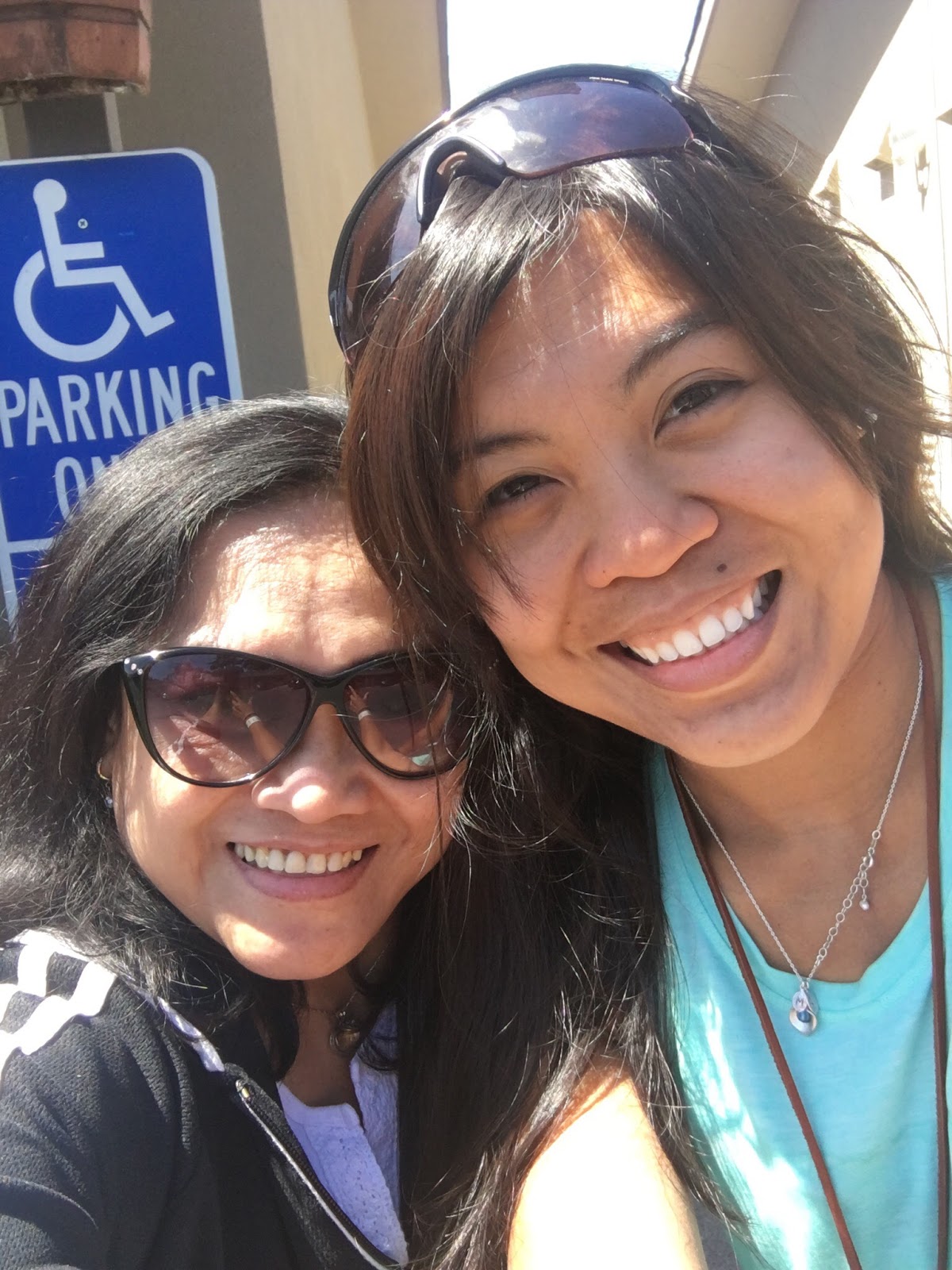
Tuesday, May 2, 2017

Big Sur International Marathon // FIRST MARATHON COMPLETE!

People always say finishing a marathon is a big accomplishment. I am so so happy that my first marathon was Big Sur and that I finished strong, under four hours.


I don't feel that I can do a proper race report so I'm just going to spill out a summary of all my thoughts here.

Official chip time - 3:56:57
Pace - 9:02/mi
Elevation gain - 1,461ft (Garmin's GPS tracking is getting better year to year!)


The Race Strategies and Execution:

  • Strategy #1: Run withe Pacer. The week before, I was dead set on running with a pacer, just because I was dealing with all sorts of misfortune in the three weeks leading up to the race (bruised ribs, getting sick with a nasty cough, pain and difficulty breathing from said cough+bruised rib combo, and a skin infection). Also, I wanted a group of people to enjoy the race with (and draft off of in the headwinds :P). I flip flopped between a decision to run with the 3:45 pacer or the 4:00 pacer, since that's all that was available (I wish they had had 3:55!!!!). In the end, since I had dealt with so much and didn't taper as well as I'd hoped, I chose to run with the 4:00 Clif Bar Pace Team Pacer (George). Per George's suggestion, I planned to keep with him until around mile 22 then push until the end if I was feeling good.
    • I ended up learning quite a lot from the pacer. It turns out his favorite way to race marathons is via heart rate, which I personally think might be the way I race future marathons as well. He was also very good about making sure we took the early downhills in a very relaxed manner. He reminded us to keep our shoulders rolled back and relaxed with chin up, and had us mind our form several times throughout the race. This was very new to me but I found this was the perfect way to keep me focused on my goals. I will be implementing this technique in future races!
    • I ended up gradually building up speed starting at mile 21. The last 5 miles was completely uncharted territory for me, with my biggest distance being a 21-mile trail race 6 1weeks out. But given I felt fine after Folsom, and that during the Big Sur marathon, I ran at only a slightly higher intensity in the precursor 21-miles, I felt like I was at liberty to push the pace. 
    • It's said that the last 10K of the marathon is where the marathon truly starts. And where your several weeks of training shine through.  When I first started to pick up speed away from the pace group, I began by thinking about how much I didn't want them to catch me. I could still hear George's voice behind me for about a half a mile or so. It was an interesting feeling - being chased - but it helped me pick up my paces! Then, when I couldn't hear George anymore, I started focusing inward again and remembered that I had to eat. I was worried because I had run out of Gu at this point. Fortunately, the aid stations were plentiful with food options. I was able to scarf down a banana and forge ahead. 
    • With four miles left to go, I kept telling myself that I'd done four miles easy-peasy SO MANY TIMES on friggin' tired legs, in the middle of 50-mile training weeks. This was nothing short of a tempo run in the middle of that. I kept telling myself that there was no such thing as the wall. "WALL? WHAT WALL? THERE IS NO WALL." NOT WITH THE TRAINING YOU DID. And certainly not with the conservative start you had.
    • At two miles, I was still not sure whether or not I could keep this effort. I told myself: I'd done 2 mile runs at a bare minimum every day for 128 days straight. I CAN DO TWO MILES. It wasn't just the thought of that which carried me: it was the fact that I actually did the training. The fact that I consistently ran on tired legs no matter what. My training gave me the mental confidence I needed to carry me through.
  • Strategy #2. Stay Inspired & Run With Your Heart. Think of my friends and the people who inspire me during the last few miles of the race.
    • At the last hill at mile 25, I heard the voices tempting me to walk like a few other people I saw going up the hill. "If I walk, I can finish strong at the end." It was during those few hundred meters that I thought of my friends and my family and my boyfriend who were waiting for me at the finish line. I wanted to make them proud. Proud of who I am. And happy that they inspired me to get to the finish line strong. So I didn't walk. I pushed through and passed several other runners (of various race distances). I knew the rest was downhill or flat so I ran strong at the end! 
Goals:
  • Smile and have fun! [check!]
  • B Goal: Under 4 hr [check!]
  • A Goal: Under 9:00/mi pace [so close, maybe could have left the pacer earlier but was unsure of myself]
Nutrition:
  • Pre-Race @ BSIM starting line
    • Coffee (~45min before)
    • 1/2 banana (provided)
    • 3/4 cup Toasted Shredded Wheats (TJs)
    • Gu Energy Gel: Vanilla Bean (~5min before)
  • During Race
    • 4 x Gu Energy Gels --> 1@45min, 1@right before Hurricane Point, then as needed, approx 45min between
    • 1/2 banana (aid station)
    • 3 x 1/2 strawberries (aid station)
Aid Stations:
  • 1 porta potty break: dashed to a porta potty that someone was just exiting so avoided a wait time! (score one for Andrea!)
  • several water refills at BYOB stations (5?) due to it being a hot day
Finish:

The best part of finishing was hearing my boyfriend and parents call my name as I ran through the chute towards the finish. I even heard the MC say my name! (Ok, I let ONE girl pass me - I probably wasn't sprinting the hardest I could have. I don't know what race she was running but maybe if I had known she was sneaking up on me, I would have sprinted harder huehue - next time I'll look behind me before I make the final sprint :P)

When I got to the end, I didn't care what my time was. I knew I didn't reach my A goal but I was still THRILLED to reach my B goal, which I knew I crushed by several minutes. (Side note: I learned that I should set tiered goals from the Berkeley Half last November). 

Then, after chatting with my family and appeasing their need to take photos, Marvin looked up my finish time and read out 3:56:57. Woah! I broke 3:57! Imagine if I had walked any part of that last hill.... dang. That was certainly the icing on the cake for me.

It's true that I might have been able to break off from the pacer earlier for an A goal finish. But given the circumstances, I got so much more enjoyment/fun out of the experience than if I had tried to run a minute+ faster. The A goal pace was only 2-3 seconds per mile faster but I imagine that running with the pace group for most of the way made it much more fun than if I had ran alone. In addition, I took away a great lesson in focus and control from the Clif team pacer which I will apply in future races.

Post-race pains:

Any race is going to do a number on you. But add hills and road camber? The hills definitely beat my body up significantly. Road camber from the Big Sur was not as bad as I thought it would be. However, I think over time it was significant enough for my knees and feet to feel it afterwards. Same-day pain shifted between achey shins, painful extensor tendons on my feet, tweaked knees, hip soreness, and general soreness/tightness of my leg muscles (quads, glutes). I felt like a penguin afterwards!!

All in all, an amazing first marathon! I'm not sure I'll ever do a challenging course like this with a specific performance goal in mind again. My plan is to return to Big Sur one day as a Boston 2 Big Sur finisher, though. :)


At the very least, Big Sur will not be my last marathon. I've got a few more bucketlist marathons to check off first:

  • Big Sur International Marathon [check!]
  • Boston Marathon
  • Great Wall Marathon

Monday, April 17, 2017

Big Sur Marathon Taper: A Look Back at 6 Months in the Making

I'm confident I can finish a marathon.

As for execution, though... Trust your training.

I crushed my training. I trained smart. Races are won in training. And I won that race against myself.

I was consistent. I prevented injury. I kept perspective.

Consistency


After Marvin gifted me my Garmin watch, I became a "consistent" runner for the first time in my life.  The GPS watch and the Strava app motivated me to log my training and rack up the necessary miles for aerobic improvement. Before that, I ran maybe twice a week and sometimes went for weeks at a time without running. I also battled injuries more often because I was such and on and off runner. 

However, once I learned that I didn't have to run everything at 7:30-8:30 pace and that easy efforts were more important than hitting acceptable paces, I became a better, more consistent runner. I accepted my lack of aerobic endurance and relished in the ideas of "base building" and low heart training. I now think a big aerobic base is the most important part of a runner's training arsenal...

Motivation was also important. In addition to running easy, the 128 day run streak struck me on the days where I just didn't want to get out. Once I got to 50, I said.. I have to get to at least 75... and then I couldn't just stop there, I had to get to 100.. and so on... I conquered bad weather (thunderstorms and the rainiest season California has seen in decades), travel (I once ran in circles in an airport terminal during a layover), and general laziness (need I explain?). Making the goal to run every day kept my training momentum going. In future marathon training cycles, I may do another run streak or define a similar goal (like 6 days a week for x weeks).

Injury Prevention


You can't be consistent unless you avoid injury. Slow running was critical for this. In my mind, I had to build up my tendons, ligaments, and bone density to handle the stress of long distance running.This is something I feel like a lot of people miss when they talk about training for a marathon. When people think about training for a marathon, they think about training their cardio. Can they last xx:xx pace for 3-5 hours? But there's so much more to it than that. It's about training all aspects of your physical endurance: bones, ligaments, muscles, heart, lungs... Even more important, it's about training your mental endurance and mental fight in the last push towards the end. This is why marathon training is all about the recovery.. getting enough sleep every night, foam rolling, tiger balming, dynamic stretching, strength training, and even some yoga -- all things I incorporated on a regular basis.

Perspective


One thing about marathon training has been that life goes on around it. From my human physiology and python programming courses to the stresses of work to taking care of my pup to nurturing my relationships, running has been a part of my life that, well, honestly, can't live with it / can't live without it. That's true for any other physical training endeavor I might take on.

As obsessed as I was with numbers and training, I also had to make sure recovery was my number one priority. There were a handful of weeks where I had to reduce my training load or change up my training plan because of exams or stressful work weeks. 

Then there was the rib injury 3.5 weeks out from marathon day. I had to cut out my final long workout (planned 22) because my bruised ribs were making it hard to breathe. And my mileage reduced dramatically earlier than planned. I have to hope first and foremost that the rib pain is negligible by marathon time. Second, I have to accept that the last "hard" week of training had to be sacrificed for the sake of recovery. Taper might have started early but I still have a lot of fitness from the six months leading up to the marathon. And that counts for something! The only thing left now is to enjoy the taper. :)

As for time goals - I don't need to run fast for my first marathon. I have nothing to prove except that I have now built up a solid aerobic base and I am a better runner from the training process.

Stats (including planned taper)

Weeks: 30
Total Miles: 1,137
13+ mile runs: 7
16+ mile runs: 7
18+ mile runs: 2 (1 w/ nutrition practice)
20+ mile runs: 2 (1 w/ nutrition practice and at moderate effort/trail race)
10+ mile runs: 17+

Est. easy pace: 9:15-10:00/mi
Est. steady state pace: 8:25-8:40/mi
Est. threshold/tempo pace: 7:40/mi

BSIM Course Description: 26.2 miles, 1,800+ ft elevation gain, 1 major 2mi 5% grade climb at mile 10, rolling hills to follow, headwinds likely, estimated time added 

BSIM Goals:
1. Finish strong! And smiling!
2. Time goal within 4 hours (B goal), 8:59 pace/3:55:45 (A goal), or 8:37/3:46:00 (Reach goal)

Sunday, April 9, 2017

The run streak has ended, 128 days and 870 miles later | Minor rib injury

Last Wednesday, my bike commute to work involved a car, a rib injury, and a heavy dose of paranoia. A car I was cycling next to on Irving St decided to take a parking spot without seeing me and while I noticed the change in blinkers fast enough to avoid a T-bone collision, my shoulder and chest took the brunt of the impact onto the side view mirror. The accident shocked me shortly after the impact and I felt like someone had just punched me in the left side of my chest. Bystanders said I need to get the driver info because I got hit so thanks to them, I got myself together and exchanged info with the driver and his daughter then continued to work on my bike. Luckily, I work in the School of Nursing and saw a Nurse Practitioner who told me it doesn't look serious or broken but I should go see a doctor for x-rays.

Nothing broken. Thank goodness. I felt okay that day but, knowing my body, I knew that I was going to feel the pain later. I don't feel pain on impact injuries until about 2 days later.

I probably shouldn't have done this.. but given my inexperience with rib injuries, I actually went on a 10 mile training workout the same evening. 7x1mile repeats on the track plus warmup and cooldown. Originally, I had planned the paces to be ~8:00/mile but they ended up varying between 8:00-8:20/mi because I was so ginger and kept holding my arm against my body to minimize the use of the pectoral muscles during the run. Felt fine...

By Friday, running became extremely uncomfortable and my 10 mile easy run became 0.6 miles. That evening, to try and get my run streak mile in, I basically jogged in place for 10 minutes and tracked the damn thing on my Garmin until it read 1 mile. That was literally the last run of my run streak...

By Saturday, the pain really started to kick in. I spectated my friends who were doing a 70.3 triathlon at Napa HITS this year. It's the coolest thing watching your friends rocking your team kit (UCSF Triathlon) and crossing the finish line after a friggin' long triathlon distance - especially in brutal conditions. The weather decided to be unfriendly that day and apparently one person was hospitalized and 30 people were treated for symptoms of hypothermia. I guess that's what's crazy about the triathlon. You're literally an endurance spartan.

Anyway, that day involved a lot of driving and taking care of Marshmallow. By the end of the day, bending down, breathing, sneezing, coughing, and laughing were uncomfortable and very painful.
Rib injuries are pretty freaking debilitating. I was afraid to make any movements, so much so that I cried, not from the pain and discomfort but from the intense fear of moving.

On cycling forums, I read that even if a rib injury isn't serious, bruised ribs and fractured ribs pretty much feel the same, painwise, and require the same treatment. One just lasts longer than the other. Proper rest would increase your chances of a rapid and uncomplicated healing process. So I made the hard decision to end my run streak 22 days early and make modifications to my last hard week of marathon training.

If my arm is feeling slightly better, I would like to fit in a few key workouts:

  • 17 mile long run with some at goal pace: 2mi warmup, 14mi @ 8:30/mi, 1mi cooldown
  • One last threshold tempo run up radio rd and back

Based on how my chest feels during race week, I will probably need to adjust my goal time as well.  Instead of shooting for 8:30/mi pace, I will shoot for just sub-9:00/mi for the first half of the marathon, aiming to stay fresh until the second half of rolling hills. Instead of a 3:45:xx (A goal), I'll shoot for under 3:55:30 (B goal)!

No matter what, a sub-4 finish will be hella impressive at Big Sur. (C goal)

Also, I'm not all that bummed about cutting my run streak short. In the grand scheme of things, 128 vs 150 is tomato to-ma-to. Sure, my beautiful mileage statistics will take hit but I wasn't in full control of the circumstances. Plus, I learned a lot from this run streak:

  1. Running and more generally, exercising, has become a habit that I don't put off anymore. It's something I can say I'm actually dedicated to now. 
  2. There's a purpose to every workout that I do.
  3. It is possible to run for 128 days straight and NOT get injured! Statistically, I ran an average of 6.8 miles a day which would be insane if you had told me that last July when I finished my first half marathon. Just insane.
  4. It's also possible to not lose a single pound of weight during a run streak. My appetite caught up to me after I got down to 121-122 and I inched slowly back to my body's preferred setpoint of 125. Weight loss is truly going to be about dialing in on nutrition... which will be my first health/fitness priority post-marathon. (second will be cycling :D)
  5. If I ever do a run streak again, maybe I'll set a goal? (e.g. a mileage based goal: 1,000 miles of running every day?)